
From the Archives · Originally published 2013 · Updated October 2026
Disclosure: As an Amazon Associate we earn from qualifying purchases. This retrospective contains links to modern alternatives — the 2012 model itself is long discontinued.
In 2012, gaming laptops had a simple reputation: they were either ruinously expensive or embarrassingly underpowered. There was barely a middle ground. Then Acer did something unusual — it stuffed a quad-core Core i7 and a dedicated NVIDIA GPU into a 17-inch chassis and sold the whole thing for around $830.
The Acer Aspire V3-771G-6851 wasn’t a “real” gaming laptop by the standards of Alienware or ASUS ROG. It was something arguably more interesting: the machine that proved budget gaming laptops could exist at all. Fourteen years later, it’s worth looking back at what made it special, where it fell short, and — most usefully — what you should buy in 2026 if you loved what this machine stood for.
Want a modern equivalent? See the best gaming laptops under $800 in 2026.
The Original Specifications
| Component | Specification |
|---|---|
| Processor | Intel Core i7-3632QM (Ivy Bridge, 4 cores / 8 threads, 2.2–3.2 GHz) |
| Graphics | NVIDIA GeForce GT 640M, 2GB DDR3 |
| Memory | 8GB DDR3 |
| Storage | 1TB HDD (5,400 rpm) |
| Display | 17.3-inch, 1600 × 900 TN panel |
| Operating system | Windows 8 |
| Weight | ~3.3 kg (7.3 lbs) |
| Launch price | ~$830 |
On paper in late 2012, that spec sheet was startling for the money. Quad-core i7 processors were still largely reserved for machines costing $1,200 and up, and here was one sitting next to a discrete GPU in a machine cheaper than many ultrabooks.
What Made It Special in 2012
A quad-core i7 under $900 was genuinely rare. Most budget laptops of the era shipped with dual-core chips. The i7-3632QM was a 35W low-voltage part, which meant Acer could cool it in a mainstream chassis without the fans sounding like a jet preparing for takeoff — most of the time, anyway.
The GT 640M could actually game. Let’s be honest about expectations: nobody was playing Crysis 3 at ultra settings on this thing. But the games people actually played in 2012–2013 — Skyrim, Borderlands 2, Battlefield 3, League of Legends — ran respectably at the panel’s native 900p with medium settings, typically in the 30–45 fps range based on published benchmarks of the era. For a machine that cost less than a MacBook Air, that was remarkable.
The 17.3-inch screen was the headline act. Competitors at this price gave you 15.6 inches. The V3-771G gave you a huge (if mediocre — more on that below) canvas for both games and movies. For a college student who wanted one machine for everything, the value proposition was obvious.
The Compromises (Let’s Be Honest)
Nostalgia is a liar, so let’s be clear about what $830 actually bought you:
The display was a TN panel in the worst sense. Washed-out colors, narrow viewing angles, mediocre brightness. Tilt the screen two degrees and the image inverted. Gamers tolerated it because the size compensated; nobody loved it.
The 5,400 rpm hard drive was the machine’s original sin. Boot times were measured in minutes, not seconds. Level loads in open-world games were exercises in patience. This single component did more to make the laptop feel slow in daily use than anything else — a fact the SSD era would later prove conclusively.
The GT 640M came in two flavors, and this was the slower one. NVIDIA shipped the 640M with either DDR3 or GDDR5 memory. The Aspire used DDR3, which meaningfully reduced memory bandwidth. It was still fine for 2012 games, but it aged faster than the GDDR5 variant would have.
“Portable” was a strong word. At 7.3 pounds with a 17-inch footprint, this was a transportable desktop, not a laptop you’d happily carry across campus daily. Battery life hovered around three hours doing light work — less if you so much as looked at a game unplugged.
How It Aged
Here’s the interesting part: the V3-771G aged in two completely different ways depending on the component.
The CPU aged gracefully. The i7-3632QM remained competent for web browsing, office work, and media for the better part of a decade. Quad-core Ivy Bridge was simply a lot of processor for 2012, and everyday computing didn’t outgrow it quickly.
The GPU aged like milk. By 2015, new AAA releases were leaving the GT 640M behind, and by 2018 it was relegated to esports titles at low settings and indie games. That’s the eternal truth of budget gaming hardware: the CPU is an investment, the GPU is a rental.
The hard drive, paradoxically, gave the machine a second life — once replaced. Owners who swapped in an SSD (a popular and cheap upgrade) reported the V3-771G feeling faster in daily use than many newer budget machines. It’s a lesson that still applies in 2026: storage speed shapes perceived performance more than most people expect.
3 Modern Spiritual Successors in 2026
Nobody should buy a V3-771G in 2026 (more on that in the FAQ). But the idea — big screen, honest specs, fair price — is alive and well. If that’s what you’re after, these are the modern heirs:
1. Acer Nitro V 16 — The Direct Heir (~$850)
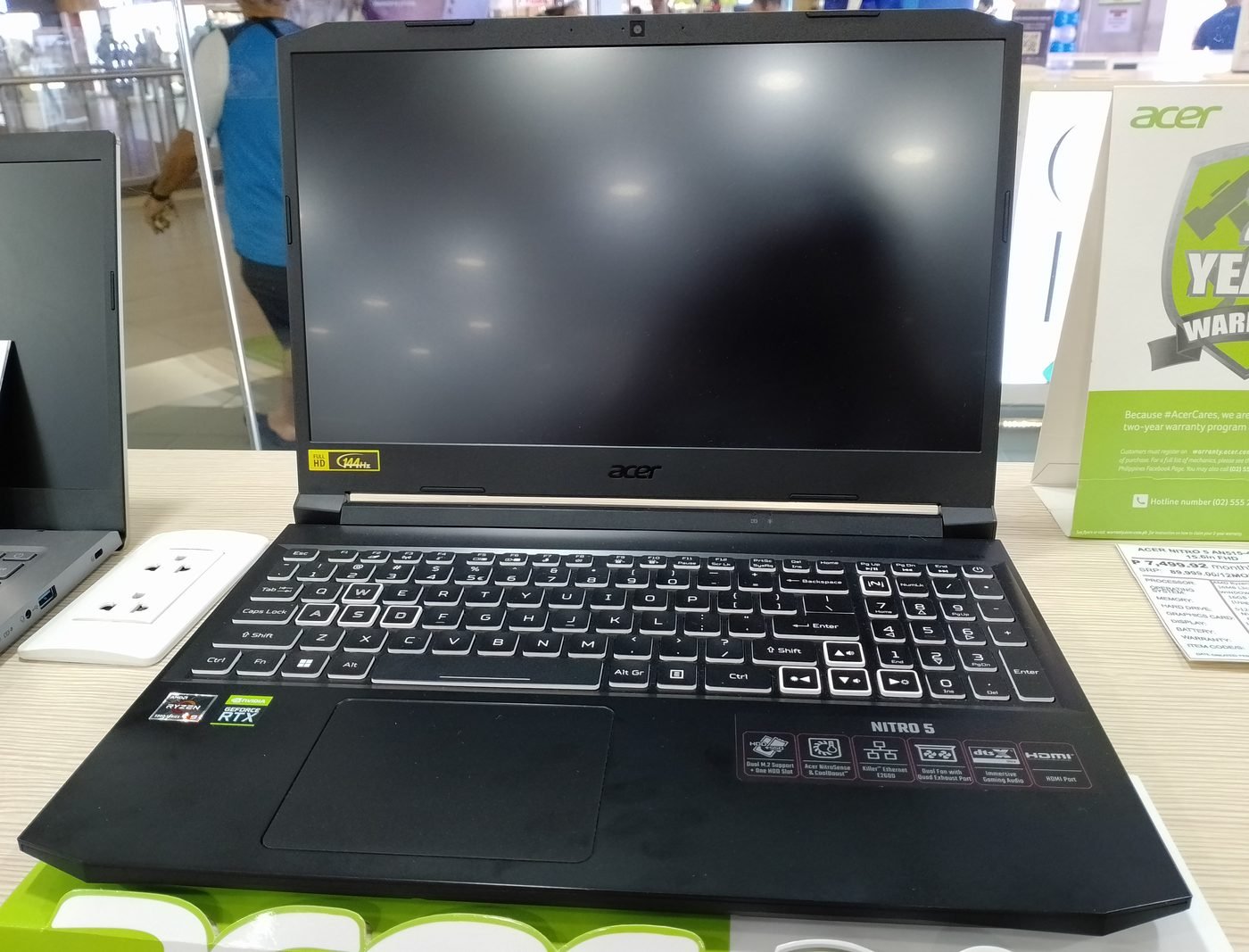
Fittingly, Acer itself makes the closest modern equivalent. The Nitro V 16 pairs an RTX 5050 or 5060 with a modern Ryzen or Intel chip and a 16-inch 165Hz display — roughly the same inflation-adjusted price as the V3-771G, with perhaps 8–10x the gaming performance.
- GPU: NVIDIA RTX 5050 / 5060 laptop
- Display: 16″ 165Hz IPS (a universe beyond the old TN panel)
- Why it fits: same brand, same budget-big-screen philosophy
2. Lenovo LOQ 15 — The Budget King (~$750)
The LOQ line is what the V3-771G wanted to be: genuinely affordable, no-nonsense gaming hardware with cooling that doesn’t embarrass itself. The 2026 models with RTX 5050-class GPUs handle 1080p gaming comfortably.
- GPU: NVIDIA RTX 5050 laptop
- Display: 15.6″ 144Hz IPS
- Why it fits: maximum frames per dollar, honest pricing
3. ASUS TUF Gaming A16 — The Step Up (~$1,000)
If your budget stretches slightly, the TUF A16 adds better build quality, a faster display, and military-grade durability testing — the “grown-up” version of the budget gaming dream.
- GPU: NVIDIA RTX 5060 laptop
- Display: 16″ 165Hz
- Why it fits: budget spirit, premium execution
Further reading: best gaming laptops under $800 · gaming laptop buying guide · best gaming laptops under $1,000
Frequently Asked Questions
Can the Aspire V3-771G still play games in 2026?
Light ones, yes. Esports titles like League of Legends or CS2 at low settings, indie games, and anything from its own era will run. Modern AAA games? No — the GT 640M lacks the raw power and modern API support. Think of it as a retro-gaming and media machine today.
Is it worth buying a used V3-771G?
Only at throwaway prices (under ~$100) and only for basic tasks — web, office, media playback. If you do, an SSD swap is mandatory; it's the single most transformative upgrade. Don't buy one expecting a gaming machine.
Why was the V3-771G so popular back then?
Simple math: quad-core i7 + dedicated NVIDIA graphics + 17-inch screen for ~$830 in 2012. Nothing else touched that combination. It democratized PC gaming for students and budget buyers.
What's the closest modern equivalent?
The Acer Nitro V 16. Same manufacturer, same philosophy — big screen, real gaming GPU, fair price — executed with 2026 technology.
The Verdict
The Acer Aspire V3-771G-6851 deserves its place in gaming-laptop history. It wasn’t the fastest or the prettiest machine of 2012, but it proved a market existed for affordable gaming laptops — a market that, in 2026, is one of the most competitive segments in the industry. Every Nitro, LOQ, and TUF sold today owes a small debt to this unassuming black slab.
If you owned one, we’d love to hear your memories. And if you’re shopping now, the successors above carry the torch — brighter, faster, and with screens you can actually tilt.

admin
Hardware-obsessed reviewer covering gaming laptops, GPUs and the deals worth your money.